Buy cncb.eu ?
We are moving the project
cncb.eu .
Are you interested in purchasing the domain
cncb.eu ?
domain@kv-gmbh.de · 0541-91531010
Buy cncb.eu ?
What is the meaning of the terms Baby, Staff, Nazi, and Marke?
The term "Baby" can refer to a young child or infant. "Staff" can refer to a group of employees or workers within an organization. "Nazi" is a term associated with the National Socialist German Workers' Party, which was a far-right political party in Germany during the 20th century. "Marke" is a German word that translates to "brand" in English, and can refer to a company's trademark or a specific product brand. **
Where does the expression "eine Marke sein" originate from?
The expression "eine Marke sein" originates from the German language and it translates to "to be a brand" in English. It is used to describe someone or something that is well-known, recognized, or has a strong reputation. The origin of the expression can be traced back to the world of marketing and advertising, where the concept of a "brand" is used to differentiate and promote products or services. Over time, the expression has been adopted into everyday language to describe individuals or things that have a distinct and recognizable identity. **


Similar search terms for Marke-Practice-book-of
Top-Angebote
Products related to Marke-Practice-book-of:
-
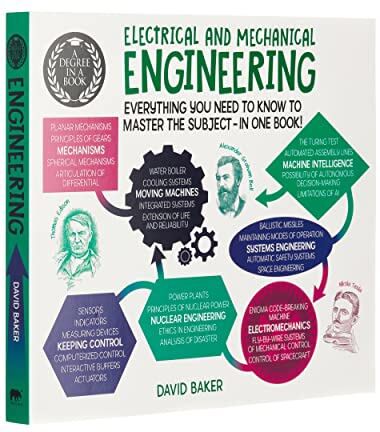
Arcturus A Degree in a Book: Electrical & Mechanical Engineering by Dr. David Baker Illustrated Engineering Guide Degree in a Book SeriesGain a clear understanding of engineering principles with A Degree in a Book: Electrical and Mechanical Engineering by David Baker. Part of the acclaimed Degree in a Book series, this highly visual guide simplifies the essential concepts of electrical and mechanical engineering into an accessible and engaging format. Written by former NASA engineer Dr. David Baker, the book features full-colour illustrations, diagrams, flowcharts, timelines, and infographics to help readers grasp complex engineering topics with ease. It covers key subjects including mechanics, electricity, electronics, thermodynamics, materials, manufacturing, artificial intelligence, nuclear engineering, and emerging technologies. Whether you're a student beginning your engineering journey, preparing for exams, or simply interested in understanding how engineering shapes the modern world, this book provides a practical introduction without requiring prior technical knowledge. Why Readers Love This Book: Comprehensive introduction to electrical and mechanical engineering Written by former NASA engineer Dr. David Baker Full-colour illustrations, diagrams, and infographics for easy learning Covers both engineering theory and real-world applications Ideal for students, STEM enthusiasts, and lifelong learners Part of the bestselling Degree in a Book educational series A practical and engaging engineering reference, A Degree in a Book: Electrical & Mechanical Engineering makes complex technical concepts easy to understand for readers of all levels.5,99 £*Shipping: 2,99 £Secure redirect to the provider
-
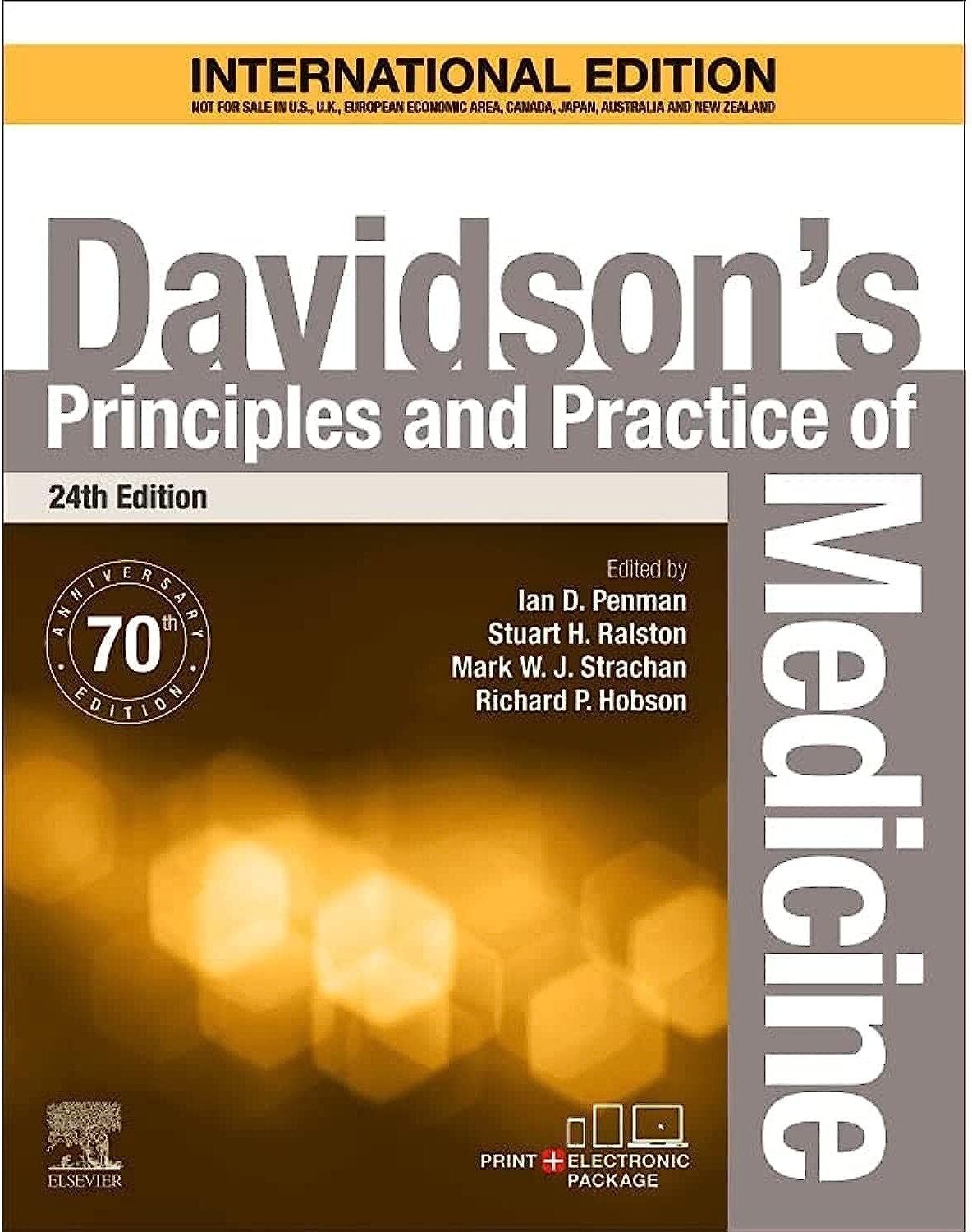
Elsevier Davidsons Principles and Practice of Medicine International EditionWell over two million medical students, doctors and other health professionals around the globe have owned a copy of Davidson’s Principles and Practice of Medicine since it was first published over 70 years ago. Now in its 24th Edition, this thoroughly updated textbook describes the pathophysiology and clinical features of the most frequently encountered conditions in the major specialties of adult medicine, and explains how to recognise, investigate, diagnose and manage them. Taking its origins from Sir Stanley Davidson’s much-admired lecture notes, Davidson’s has endured because it keeps pace with how modern medicine is taught and provides a wealth of trusted information in an easy-to-read, concise and beautifully illustrated format. Key features: Part 1 ‘Fundamentals of Medicine’ - provides an account of the principles of genetics, immunology, infectious diseases, population health, oncology and pain management, along with a discussion of the core principles behind clinical decision-making and good prescribing. Part 2 ‘Emergency and Critical Care Medicine’ - covers medical emergencies in poisoning, envenomation and medicine in austere environments, as well as common presentations in acute medicine and the recognition and management of the critically ill. Part 3 ‘Clinical Medicine’- covers the major medical specialties, each thoroughly revised and brought fully up to date. A new section on COVID-19 has been added and the impact of this infection is described throughout the book. Clinical Examination overviews - extended and updated to summarise the main elements for each system. Presenting Problems sections - provide a clear pathway for the assessment of and approach to the most common complaints in each specialty. Practice Point summaries - detail the practical skills that medical students and junior doctors must acquire. Emergency boxes - emphasise the core knowledge needed to manage acutely ill patients. In Old Age, In Pregnancy and In Adolescence boxes - highlight differences in the practice of medicine in these patient groups, and illustrate the interfaces between medical, obstetric and paediatric services. The text is extensively illustrated, with over 1000 diagrams, clinical photographs, and radiology and pathology images. The global perspective is enhanced by an International Advisory Board of experts from 11 countries and by leading authors from around the world.29,99 £*Shipping: 2,99 £Secure redirect to the provider


-
Does anyone know of a good practice book for Latin grammar?
Yes, one highly recommended practice book for Latin grammar is "Wheelock's Latin Workbook" by Paul T. Comeau. This workbook complements the popular textbook "Wheelock's Latin" and provides exercises and drills to reinforce grammar concepts. Another option is "Latin Grammar: Grammar Vocabularies, and Exercises in Preparation for the Reading of the Missal and Breviary" by Cora Carroll Scanlon and Charles L. Scanlon, which offers a comprehensive review of Latin grammar with a focus on Catholic liturgical texts. Both of these practice books are widely used and respected in the study of Latin grammar. **
-
How can one practice programming?
One can practice programming by starting with the basics of a programming language, such as learning syntax and common programming concepts. It is important to work on small projects or coding challenges to apply what you have learned and improve your problem-solving skills. Additionally, collaborating with other programmers, joining coding communities, and seeking feedback on your code can help you learn and grow as a programmer. Consistent practice and dedication are key to mastering programming skills. **
-
How difficult is a study of robotics and automation?
The study of robotics and automation can be challenging due to its interdisciplinary nature, requiring knowledge in fields such as mechanical engineering, electrical engineering, computer science, and control systems. Additionally, the rapid advancements in technology and the need to stay updated with the latest developments can add to the complexity of the study. However, with dedication, problem-solving skills, and a strong foundation in mathematics and physics, students can overcome these challenges and excel in the field of robotics and automation. **
-
Which book about robotics can you recommend?
I recommend "Robotics: Everything You Need to Know About Robotics from Beginner to Expert" by Peter Mckinnon. This book provides a comprehensive overview of robotics, covering topics such as the history of robotics, different types of robots, and the future of robotics. It is suitable for both beginners and experts, making it a great resource for anyone interested in learning more about robotics. **


Is this a matter of practice or of the practice?
The use of "practice" versus "the practice" depends on the context. If you are referring to the general concept or act of practicing something, then you would use "practice." However, if you are referring to a specific instance or established procedure, then you would use "the practice." So, whether you use "practice" or "the practice" depends on whether you are talking about a general idea or a specific instance. **
What should I practice for the exam on a French book?
For the exam on a French book, you should practice reading and understanding the main themes, characters, and plot of the book. Additionally, you should be able to analyze and discuss the author's writing style, literary techniques, and the historical or cultural context of the book. It would also be helpful to practice writing essays or responses that demonstrate your understanding and interpretation of the book. Finally, reviewing vocabulary and grammar related to the book's themes and content would also be beneficial for the exam. **
Top-Angebote
Products related to Marke-Practice-book-of:
-
Usborne STEM Scribble Books Collection – 4 Book Set Science, Technology, Engineering & Maths Activity Books for KidsInspire curiosity and creative learning with the Usborne STEM Scribble Books Collection – 4 Book Set, from the trusted Usborne. This exciting educational collection includes: Science Scribble Book Technology Scribble Book Engineering Scribble Book Maths Scribble Book Packed with fun activities, puzzles, drawing challenges, and problem-solving exercises, these interactive scribble books introduce children to the exciting world of STEM (Science, Technology, Engineering, and Mathematics). Designed to make learning enjoyable, they encourage creativity, logical thinking, and hands-on exploration. Perfect for home learning, classroom activities, school holidays, and travel, this collection helps children build confidence while developing essential STEM skills. Why Parents & Teachers Love This Collection: Includes 4 engaging STEM activity books Encourages creativity, problem-solving, and critical thinking Covers Science, Technology, Engineering & Maths Interactive scribble activities make learning fun Ideal for children aged 6+, home learning, and classrooms A fantastic educational resource, the Usborne STEM Scribble Books Collection helps children discover, create, and learn through exciting hands-on activities.8,99 £*Shipping: 2,99 £Secure redirect to the provider
-
Arcturus A Degree in a Book: Electrical & Mechanical Engineering by Dr. David Baker Illustrated Engineering Guide Degree in a Book SeriesGain a clear understanding of engineering principles with A Degree in a Book: Electrical and Mechanical Engineering by David Baker. Part of the acclaimed Degree in a Book series, this highly visual guide simplifies the essential concepts of electrical and mechanical engineering into an accessible and engaging format. Written by former NASA engineer Dr. David Baker, the book features full-colour illustrations, diagrams, flowcharts, timelines, and infographics to help readers grasp complex engineering topics with ease. It covers key subjects including mechanics, electricity, electronics, thermodynamics, materials, manufacturing, artificial intelligence, nuclear engineering, and emerging technologies. Whether you're a student beginning your engineering journey, preparing for exams, or simply interested in understanding how engineering shapes the modern world, this book provides a practical introduction without requiring prior technical knowledge. Why Readers Love This Book: Comprehensive introduction to electrical and mechanical engineering Written by former NASA engineer Dr. David Baker Full-colour illustrations, diagrams, and infographics for easy learning Covers both engineering theory and real-world applications Ideal for students, STEM enthusiasts, and lifelong learners Part of the bestselling Degree in a Book educational series A practical and engaging engineering reference, A Degree in a Book: Electrical & Mechanical Engineering makes complex technical concepts easy to understand for readers of all levels.5,99 £*Shipping: 2,99 £Secure redirect to the provider
-
Elsevier Davidsons Principles and Practice of Medicine International EditionWell over two million medical students, doctors and other health professionals around the globe have owned a copy of Davidson’s Principles and Practice of Medicine since it was first published over 70 years ago. Now in its 24th Edition, this thoroughly updated textbook describes the pathophysiology and clinical features of the most frequently encountered conditions in the major specialties of adult medicine, and explains how to recognise, investigate, diagnose and manage them. Taking its origins from Sir Stanley Davidson’s much-admired lecture notes, Davidson’s has endured because it keeps pace with how modern medicine is taught and provides a wealth of trusted information in an easy-to-read, concise and beautifully illustrated format. Key features: Part 1 ‘Fundamentals of Medicine’ - provides an account of the principles of genetics, immunology, infectious diseases, population health, oncology and pain management, along with a discussion of the core principles behind clinical decision-making and good prescribing. Part 2 ‘Emergency and Critical Care Medicine’ - covers medical emergencies in poisoning, envenomation and medicine in austere environments, as well as common presentations in acute medicine and the recognition and management of the critically ill. Part 3 ‘Clinical Medicine’- covers the major medical specialties, each thoroughly revised and brought fully up to date. A new section on COVID-19 has been added and the impact of this infection is described throughout the book. Clinical Examination overviews - extended and updated to summarise the main elements for each system. Presenting Problems sections - provide a clear pathway for the assessment of and approach to the most common complaints in each specialty. Practice Point summaries - detail the practical skills that medical students and junior doctors must acquire. Emergency boxes - emphasise the core knowledge needed to manage acutely ill patients. In Old Age, In Pregnancy and In Adolescence boxes - highlight differences in the practice of medicine in these patient groups, and illustrate the interfaces between medical, obstetric and paediatric services. The text is extensively illustrated, with over 1000 diagrams, clinical photographs, and radiology and pathology images. The global perspective is enhanced by an International Advisory Board of experts from 11 countries and by leading authors from around the world.29,99 £*Shipping: 2,99 £Secure redirect to the provider
-
What is the meaning of the terms Baby, Staff, Nazi, and Marke?
The term "Baby" can refer to a young child or infant. "Staff" can refer to a group of employees or workers within an organization. "Nazi" is a term associated with the National Socialist German Workers' Party, which was a far-right political party in Germany during the 20th century. "Marke" is a German word that translates to "brand" in English, and can refer to a company's trademark or a specific product brand. **
-
Where does the expression "eine Marke sein" originate from?
The expression "eine Marke sein" originates from the German language and it translates to "to be a brand" in English. It is used to describe someone or something that is well-known, recognized, or has a strong reputation. The origin of the expression can be traced back to the world of marketing and advertising, where the concept of a "brand" is used to differentiate and promote products or services. Over time, the expression has been adopted into everyday language to describe individuals or things that have a distinct and recognizable identity. **
-
Does anyone know of a good practice book for Latin grammar?
Yes, one highly recommended practice book for Latin grammar is "Wheelock's Latin Workbook" by Paul T. Comeau. This workbook complements the popular textbook "Wheelock's Latin" and provides exercises and drills to reinforce grammar concepts. Another option is "Latin Grammar: Grammar Vocabularies, and Exercises in Preparation for the Reading of the Missal and Breviary" by Cora Carroll Scanlon and Charles L. Scanlon, which offers a comprehensive review of Latin grammar with a focus on Catholic liturgical texts. Both of these practice books are widely used and respected in the study of Latin grammar. **
-
How can one practice programming?
One can practice programming by starting with the basics of a programming language, such as learning syntax and common programming concepts. It is important to work on small projects or coding challenges to apply what you have learned and improve your problem-solving skills. Additionally, collaborating with other programmers, joining coding communities, and seeking feedback on your code can help you learn and grow as a programmer. Consistent practice and dedication are key to mastering programming skills. **
Similar search terms for Marke-Practice-book-of
-
How difficult is a study of robotics and automation?
The study of robotics and automation can be challenging due to its interdisciplinary nature, requiring knowledge in fields such as mechanical engineering, electrical engineering, computer science, and control systems. Additionally, the rapid advancements in technology and the need to stay updated with the latest developments can add to the complexity of the study. However, with dedication, problem-solving skills, and a strong foundation in mathematics and physics, students can overcome these challenges and excel in the field of robotics and automation. **
-
Which book about robotics can you recommend?
I recommend "Robotics: Everything You Need to Know About Robotics from Beginner to Expert" by Peter Mckinnon. This book provides a comprehensive overview of robotics, covering topics such as the history of robotics, different types of robots, and the future of robotics. It is suitable for both beginners and experts, making it a great resource for anyone interested in learning more about robotics. **
-
Is this a matter of practice or of the practice?
The use of "practice" versus "the practice" depends on the context. If you are referring to the general concept or act of practicing something, then you would use "practice." However, if you are referring to a specific instance or established procedure, then you would use "the practice." So, whether you use "practice" or "the practice" depends on whether you are talking about a general idea or a specific instance. **
-
What should I practice for the exam on a French book?
For the exam on a French book, you should practice reading and understanding the main themes, characters, and plot of the book. Additionally, you should be able to analyze and discuss the author's writing style, literary techniques, and the historical or cultural context of the book. It would also be helpful to practice writing essays or responses that demonstrate your understanding and interpretation of the book. Finally, reviewing vocabulary and grammar related to the book's themes and content would also be beneficial for the exam. **
* All prices are inclusive of VAT and, if applicable, plus shipping costs. The offer information is based on the details provided by the respective shop and is updated through automated processes. Real-time updates do not occur, so deviations can occur in individual cases. ** Note: Parts of this content were created by AI.